Our story
Our story
Welcome, all of us together, to Alsace — with its colourful half-timbered houses, flower-filled windows, canals and fairytale villages tucked away among the vineyards 🎄💛 This French region on the German border turns into a Christmas card in December. In this guide we cover Colmar, the most beautiful villages around it, the Christmas markets and the Wine Route.
December 2023, the first Christmas market trip of our lives 😊 On our way out of Strasbourg we picked up burgers from Five Guys and hit the road to Colmar by car. It was my first ever road trip with food on board, and it was so, so much fun :)
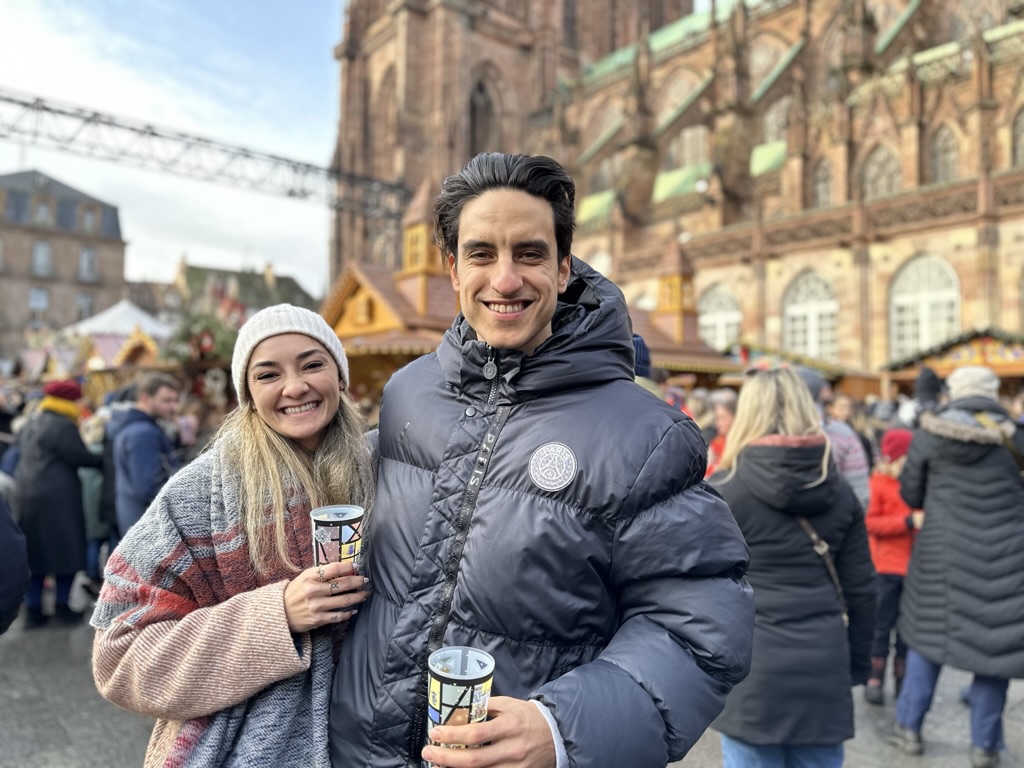
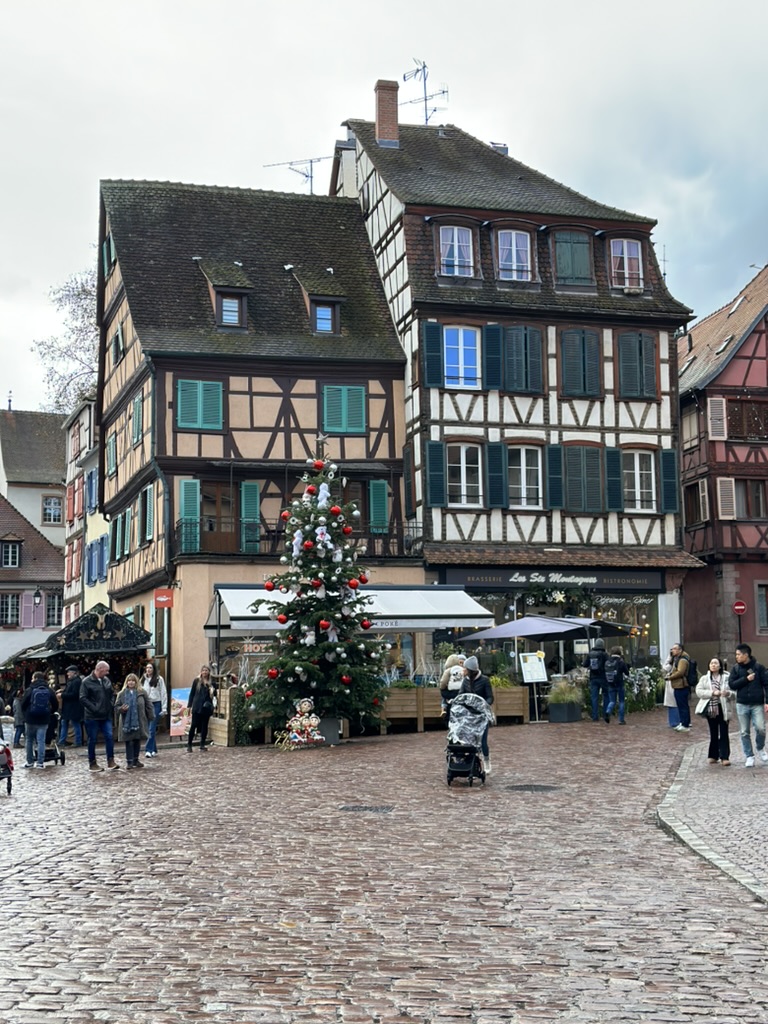
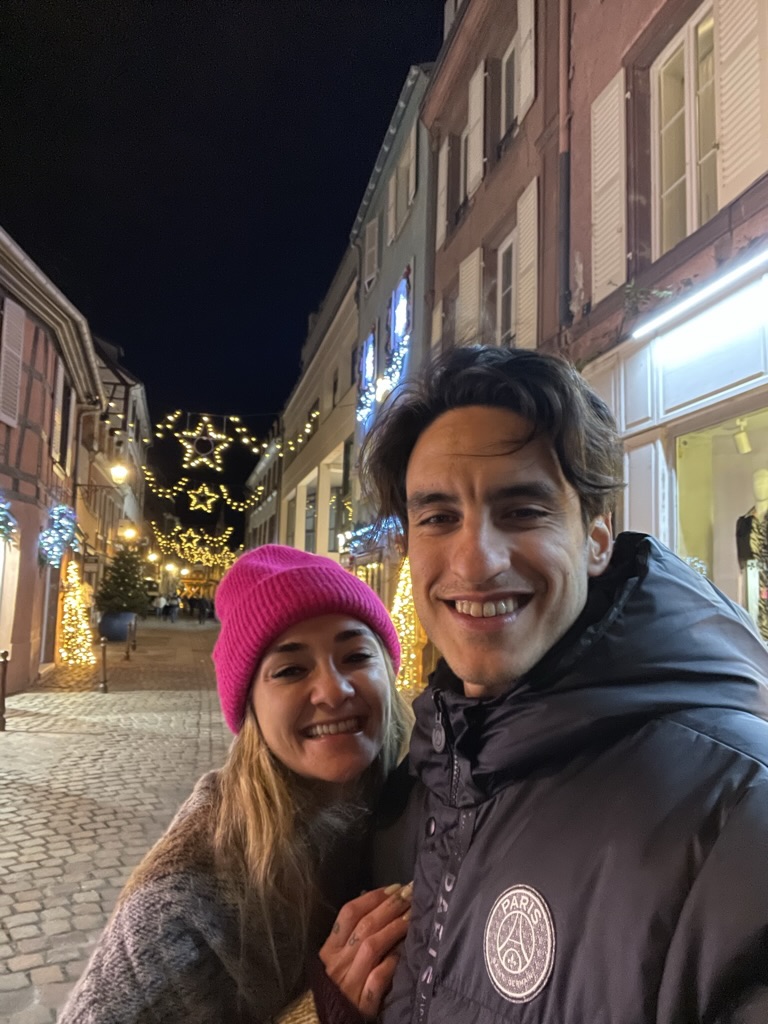
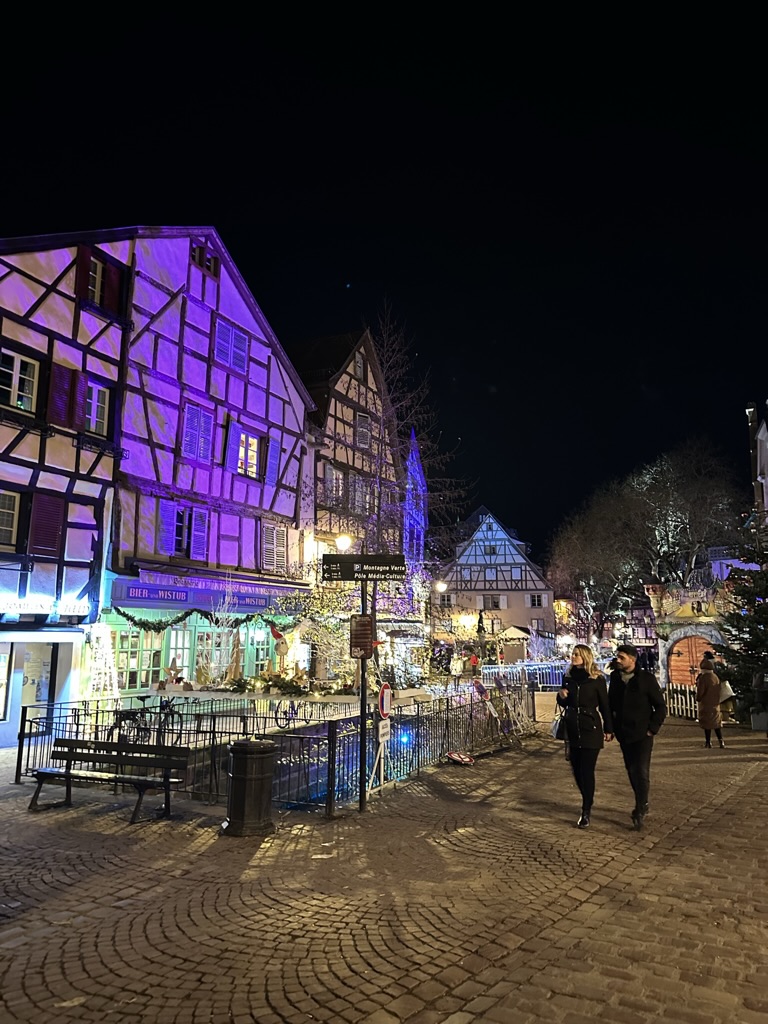
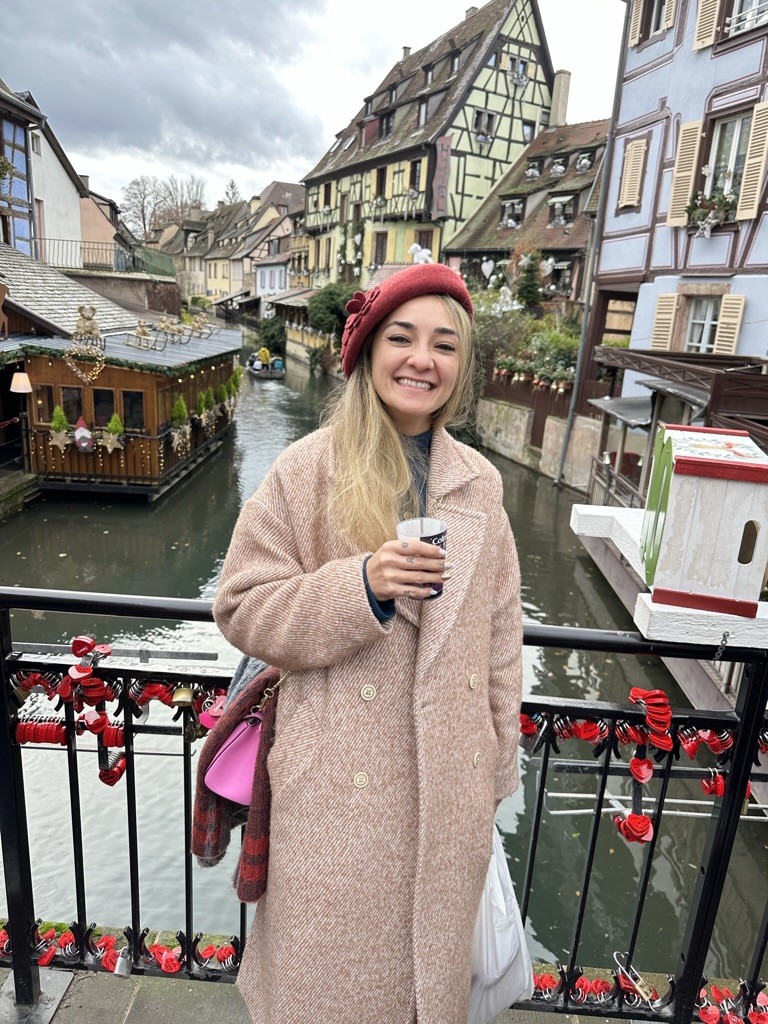
Colmar was a city straight out of a fairytale. I loved the Christmas spirit: everyone was so happy, laughing, drinking, eating — it had such a great energy 💛 Staying a night instead of a day trip was a great call too; we got to enjoy Colmar's evening lights and the Christmas atmosphere at our own pace. I'd never drunk so much mulled wine or eaten so many Nutella crêpes haha 🤓 The next day we went straight from Colmar to Basel; we're saving the villages for our next Alsace trip. That's why the village recommendations in this guide are ones we've put together for you from our research.
Alsace, in a nutshell
Alsace, in a nutshell
Alsace is a region in north-eastern France, stretching between the Vosges mountains and the Rhine, with Germany and Switzerland as neighbours. Its capital is Strasbourg. Because it changed hands between France and Germany four times between 1871 and 1945, everything — from place names and food to architecture and dialect — is a blend of two cultures.
The backbone of the region is the Alsace Wine Route, which runs for about 170 kilometres from Marlenheim in the north to Thann in the south. Opened in 1953, the route has more than 70 villages and towns scattered among the vineyards; many of them are on the list of "The Most Beautiful Villages of France".
And then there are the storks: the storks that are the symbol of Alsace almost disappeared in the 1970s, and thanks to conservation programmes, hundreds of pairs have returned to their nests on the rooftops today. In the villages you'll see them everywhere, from souvenirs to biscuits 🪶
A little tip: on every trip abroad we use Airalo to avoid sky-high phone bills — you can pick your destination country and grab an eSIM here.
For the airport transfer, we always book a private driver through Gettransfer.com and have always been happy with it — if you're interested you can book a private transfer here.
Getting around & parking
Getting around & parking
How to get to Alsace
- By plane: The closest option from Turkey is Basel-Mulhouse-Freiburg EuroAirport, an airport shared by three countries. If you're renting a car, use the French exit. Stuttgart, Frankfurt and Zurich are reasonable alternatives too; we flew into Stuttgart.
- By train: Strasbourg to Colmar takes about 30 minutes on the regional TER trains; the train continues via Mulhouse all the way to Basel. If you're coming from EuroAirport, first take the bus to Saint-Louis station, then the train to Colmar.
Within the region
- Car: The easiest way to explore the villages at your own pace. Car rental prices shoot up at Christmas, so book it together with your flights.
- Bus: There's no train from Colmar to the villages; there are buses, but they're infrequent. Check the Fluo Grand Est and Vialsace websites for timetables.
- Christmas shuttles: During the Christmas season, paid private shuttles to the villages leave from in front of Colmar train station; perfect for anyone travelling without a car.
- Tours: If you want to fit several villages into one day without a car, day tours are the most practical solution (see the Experiences & Tours section).
Parking tips
- Car park signs at the village entrances point you the way.
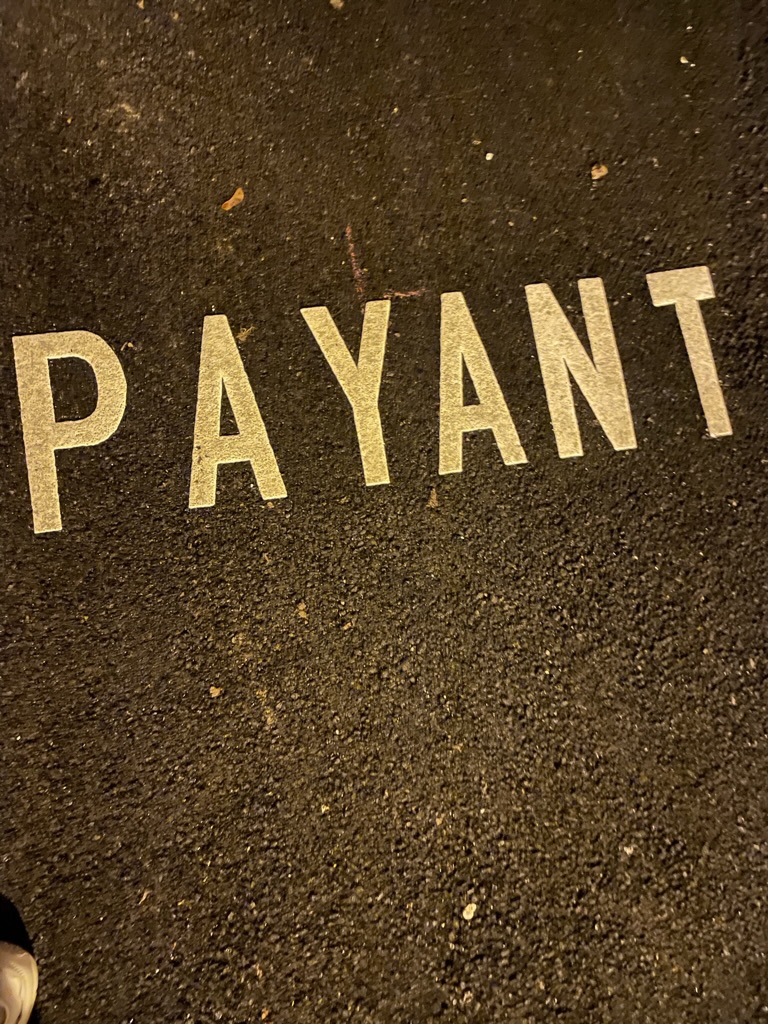
- Spaces marked "Payant" are paid: buy a ticket for the length of your stay from the nearby machine and leave it on the dashboard behind the windscreen. Some villages, such as Eguisheim's main car park, charge a flat daily fee.
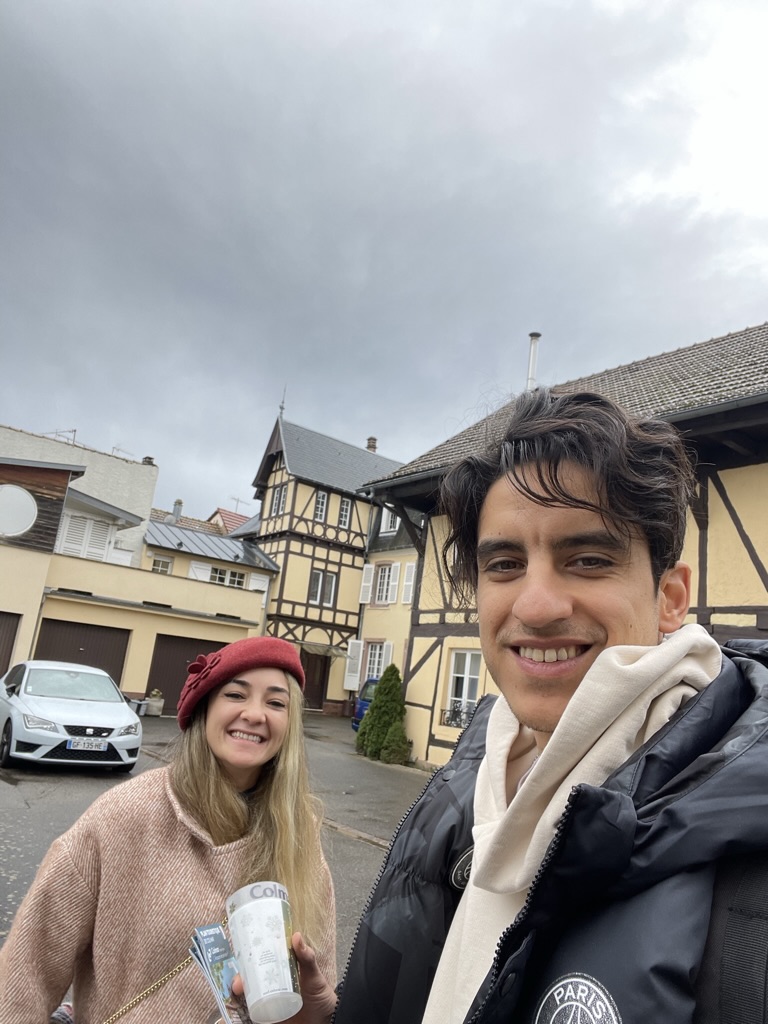
- Colmar has big car parks around the old town, but they fill up quickly at Christmas. Since we came by car, we stayed in an Airbnb with parking; it made things so easy that we'd recommend it.
Where to stay in Colmar
Where to stay in Colmar
Colmar is a small city; you can walk from one end of the old town to the other in 30–40 minutes. A day trip is possible, but we think you should stay at least one night: once the day-trippers leave in the late afternoon, you get to enjoy the lights and the markets much more calmly ✨
- Old town (Vieille Ville): Walking distance to everything, right in the middle of the Christmas atmosphere. Apartments in historic buildings are very charming, but they rarely have parking.
- Around Petite Venice & Krutenau: Close to the canals and a little quieter; wonderful for evening walks.
- Around the train station: Practical if you're arriving by train or heading to the villages on the Christmas shuttles; a 10–15 minute walk to the centre.
- If you're exploring by car: Choose a hotel or Airbnb with parking; that's what we did, and we never had to worry about the car.
- Alternatives: If Colmar is fully booked, you can stay in Mulhouse, 20–25 minutes away by train, or Strasbourg, 30 minutes away, and come for the day. For a village atmosphere, there are small guesthouses in Eguisheim and Riquewihr.
Tip: At Christmas, accommodation in and around Colmar sells out weeks in advance; we recommend booking at least 2 months ahead.
Neighbourhoods
Neighbourhoods
What to see in Colmar
What to see in Colmar
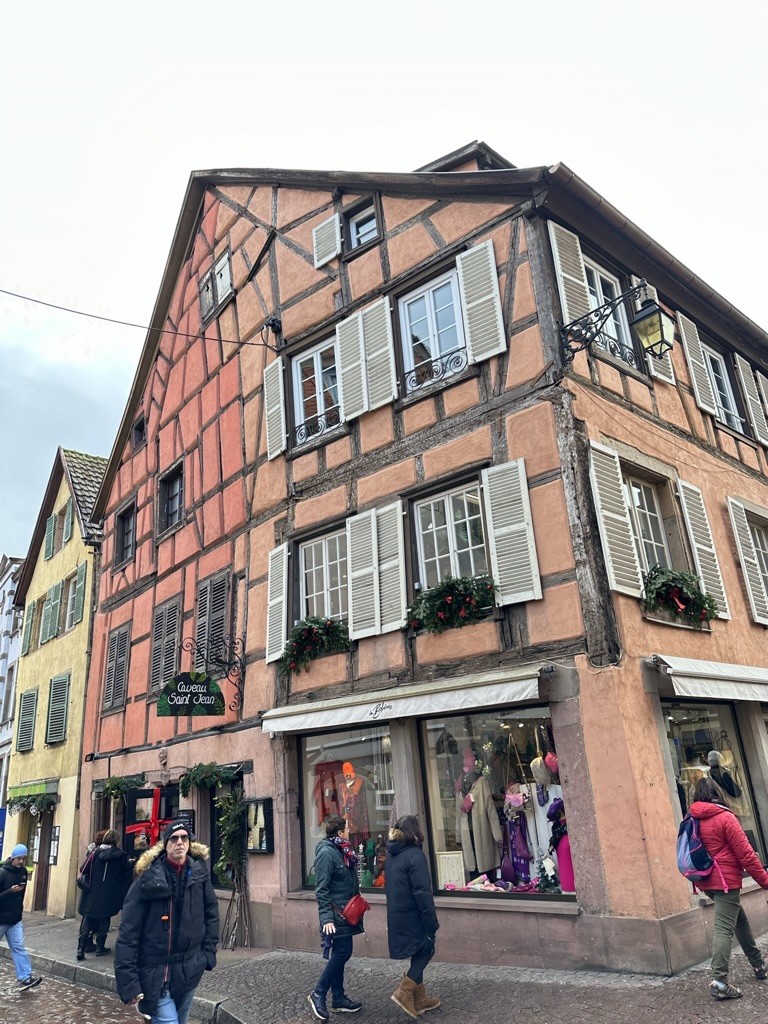
Colmar isn't a city of museums; it's a city for getting lost in its streets. Still, every corner has a story. Our own route started at Petite Venice and continued via the Quai de la Poissonnerie, the Old Customs House and Rue des Marchands.
- 01
Petite Venice
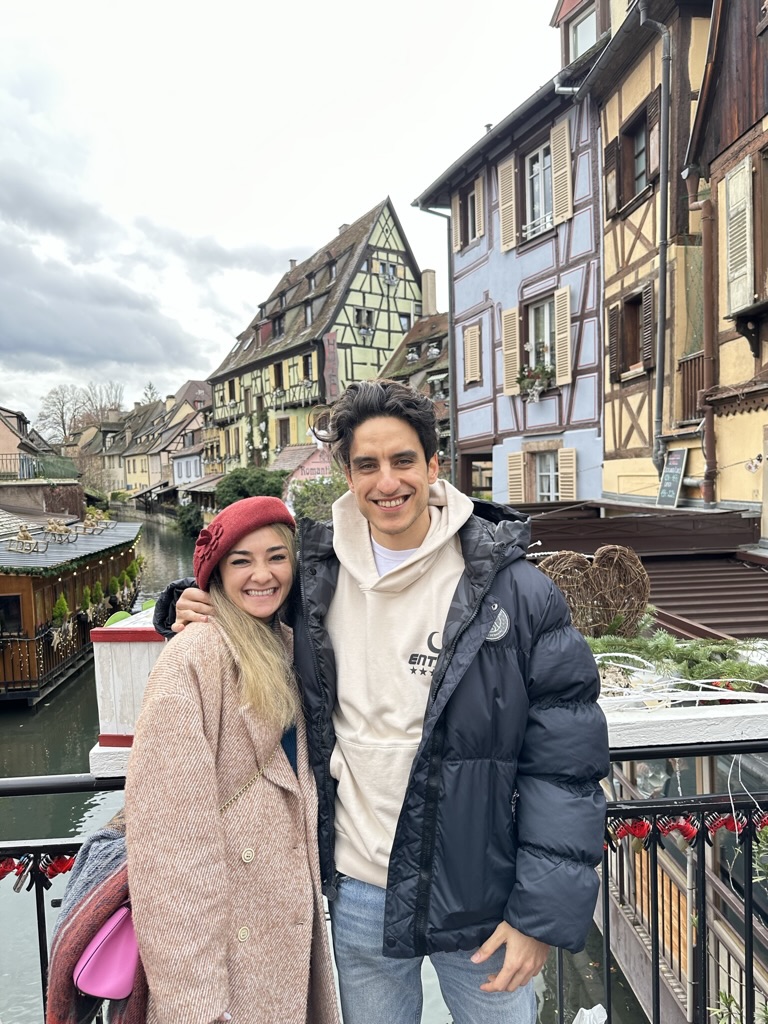
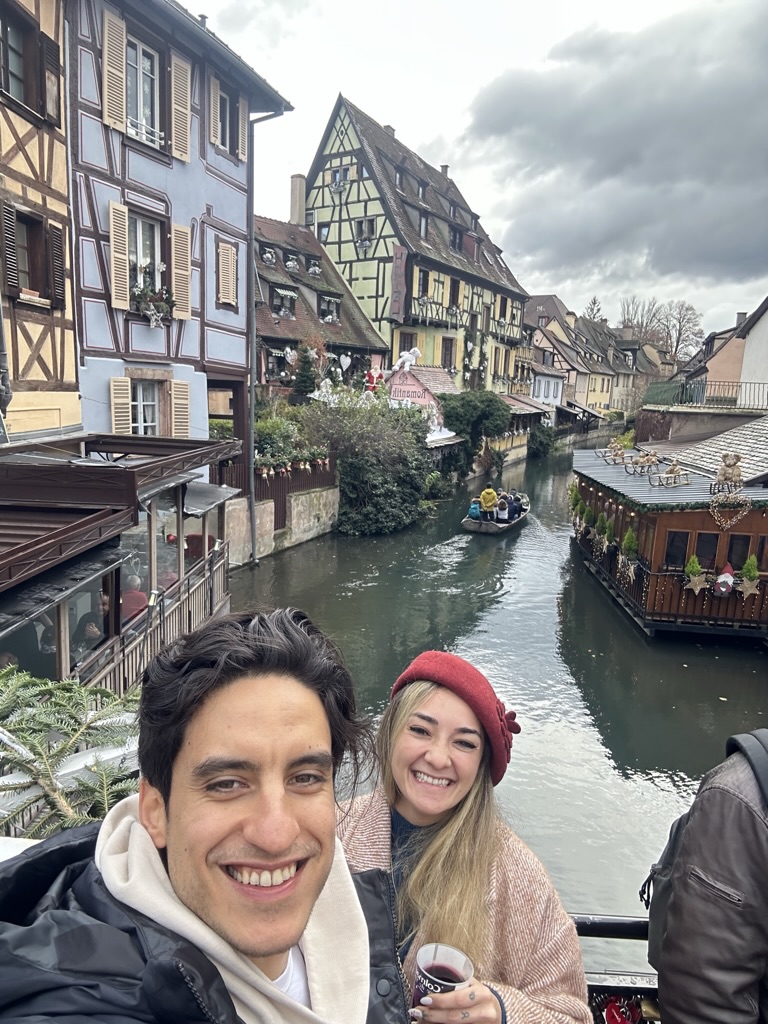
On the banks of the Lauch River, where pastel half-timbered houses are reflected in the water, this area takes its name from its resemblance to the canals of Venice. It was once a waterway where gardeners carried their fruit and vegetables to market in flat-bottomed boats. In spring and summer you can take a boat tour on the canal; the best view is from the Rue de Turenne bridge.
- 02
Quai de la Poissonnerie
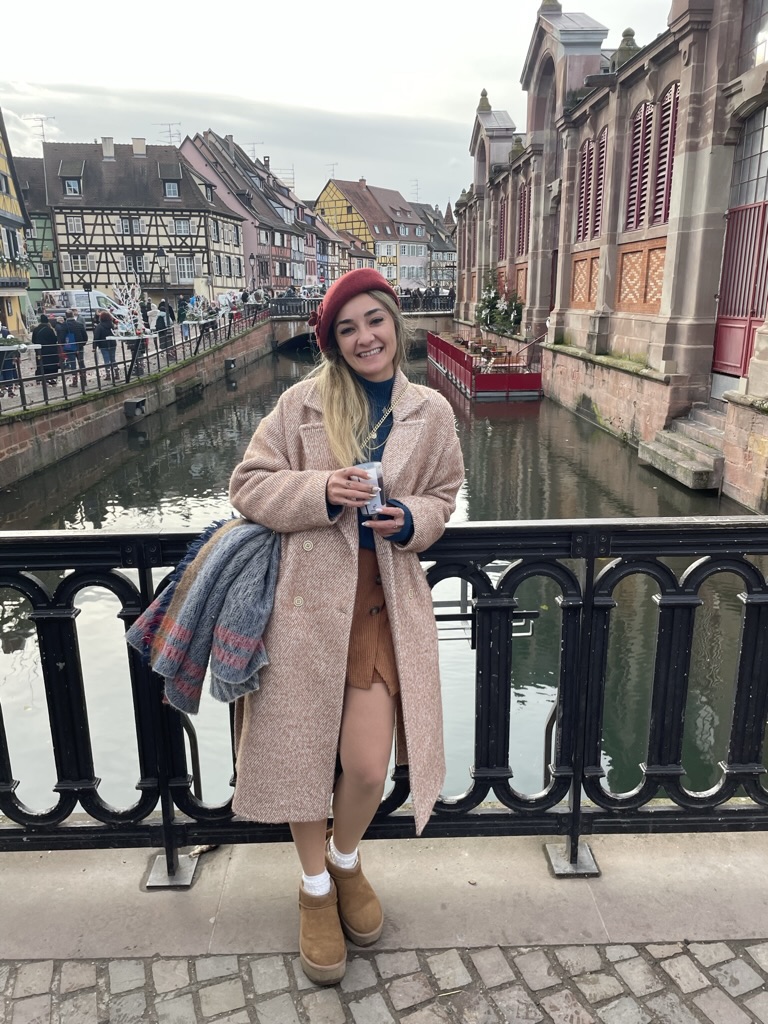
The old fishermen's quarter, where fishermen once lived and fish was sold. With its colourful houses along the canal, it's one of Colmar's sweetest corners; we loved it 😻
- 03
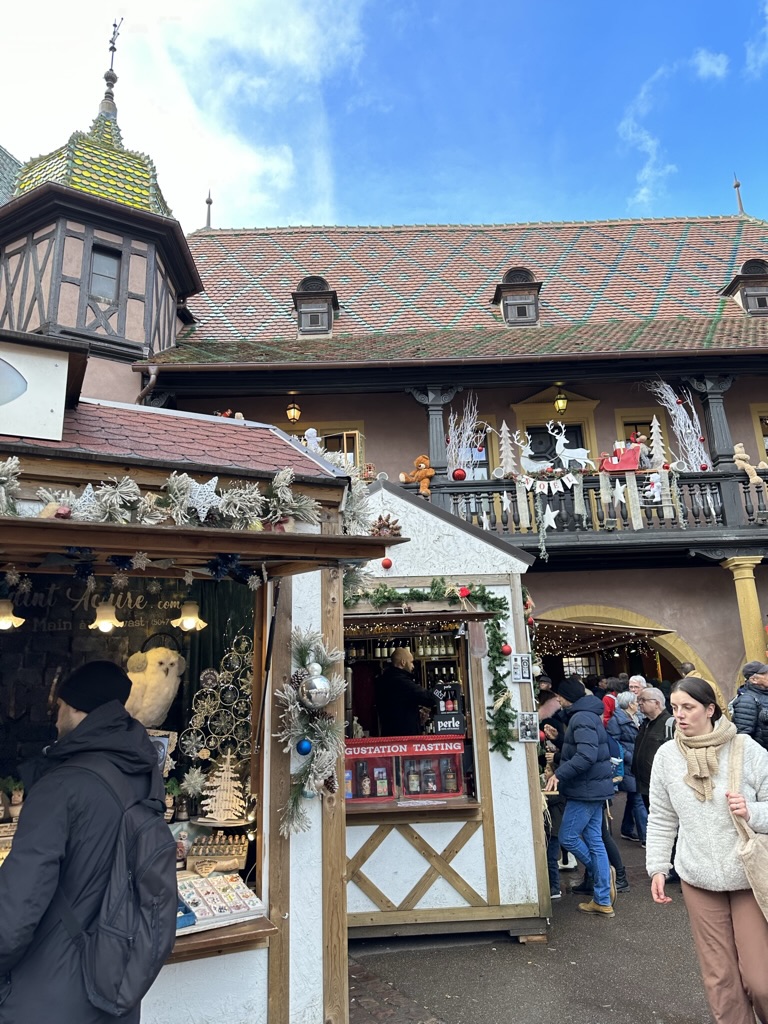
Koïfhus (Old Customs House) & Place de l'Ancienne Douane
Built in 1480 and eye-catching with its multicoloured tiled roof, the Koïfhus was the customs house where goods entering the city were taxed in the Middle Ages; for a time the city council met here too. The square in front of it is one of the liveliest corners of the market at Christmas.
- 04
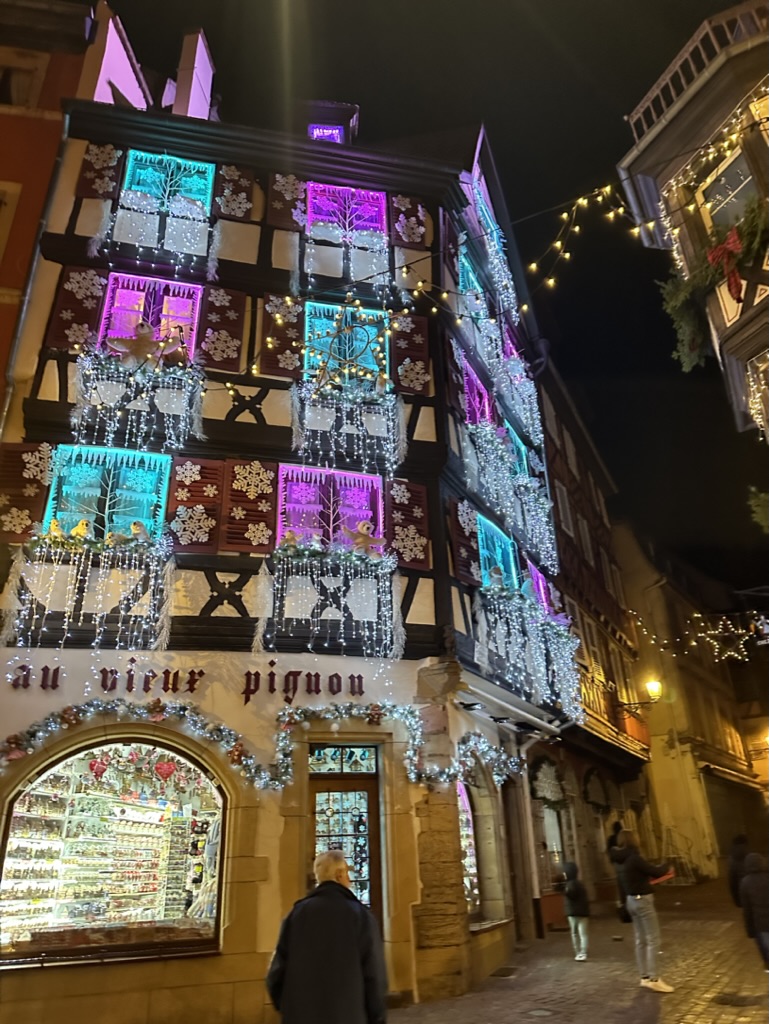
Rue des Marchands & Au Vieux Pignon
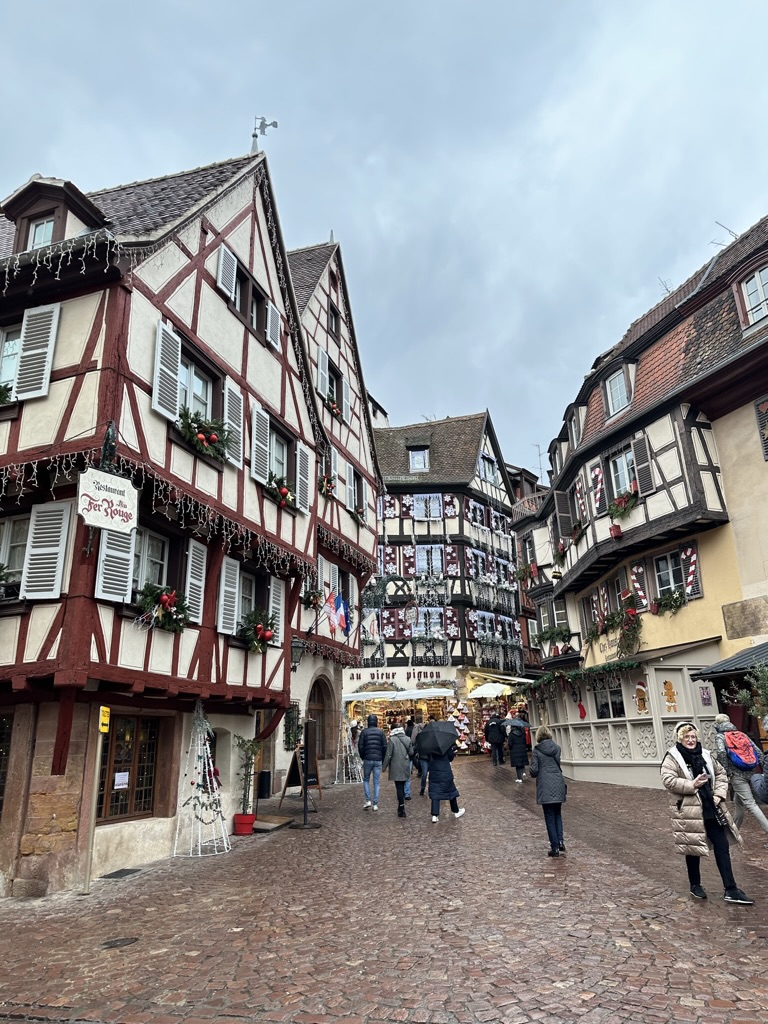
One of Colmar's most photogenic streets. With its pointed roof and still used as a souvenir shop, the Au Vieux Pignon building is a postcard classic; it's even prettier with its Christmas decorations up. Take your time wandering this street and the little side streets around it.
- 05
Maison Pfister
Built in 1537 for a wealthy hat merchant, this house with its wooden balcony and painted walls is one of Colmar's most famous buildings from the German Renaissance. It's on the corner of Rue des Marchands, and seeing it from the outside is enough.
- 06
Maison des Têtes
Built in 1609, the façade of this building is decorated with more than 100 small sculpted heads of people and animals that give it its name. Once used as a wine exchange, the building is now a hotel and restaurant.
- 07
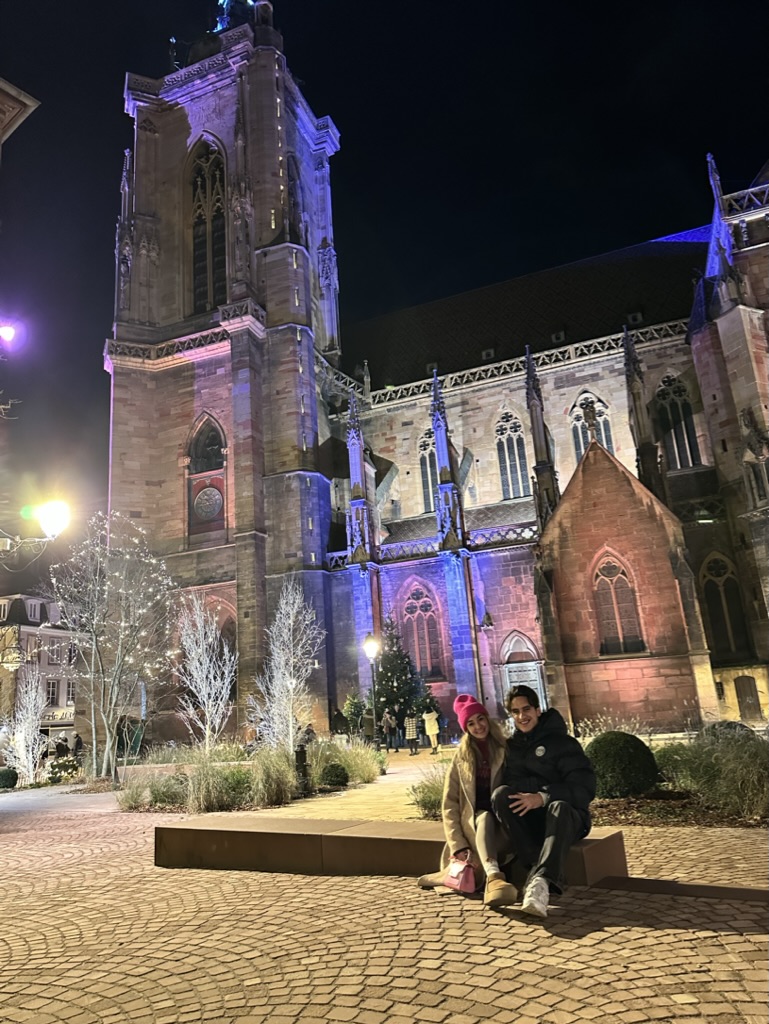
Saint-Martin Collegiate Church
Building this Gothic church, which has become the city's silhouette, took about 130 years between the 13th and 14th centuries. With its colourful roof and the square in front, it's the heart of the old town.
- 08
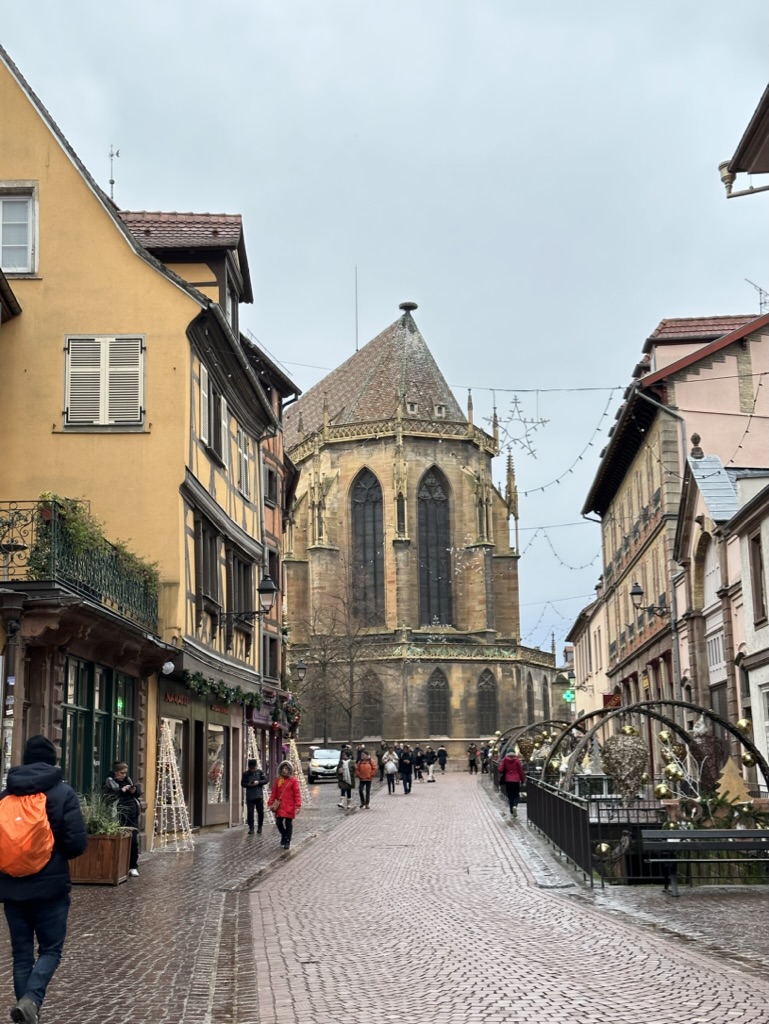
Dominican Church
This Gothic church from the 13th and 14th centuries houses Martin Schongauer's famous 1473 painting "Madonna of the Rose Bower" and magnificent stained-glass windows.
- 09
Unterlinden Museum
Set in a 13th-century convent, the museum is home to the Isenheim Altarpiece, painted by Matthias Grünewald between 1512 and 1516 and considered one of the masterpieces of Western art. Alongside medieval works, there are also pieces by modern artists such as Picasso and Monet.
- 10
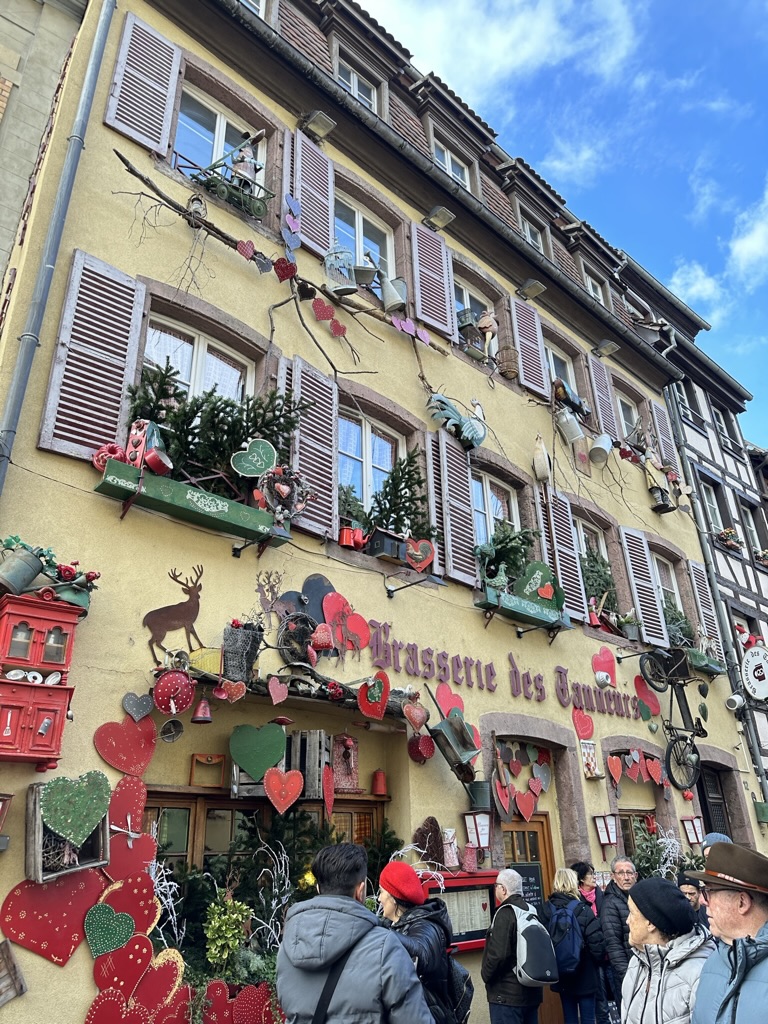
Tanneurs (Tanners') Quarter
The leather workers' quarter, with tall, narrow houses from the 17th and 18th centuries. The openings in the attics were made for drying the hides.
- 11
Bartholdi Museum & the Statue of Liberty replica
Frédéric Auguste Bartholdi, the sculptor of New York's Statue of Liberty, was born in Colmar in 1834. The house where he was born is now a museum bearing his name; and at the roundabout at the city's northern entrance, a 12-metre replica of the Statue of Liberty welcomes you 🗽
- 12
Grand Rue & Rue des Boulangers
With their cafés, patisseries and shops, these are the city's liveliest streets; perfect for an evening stroll.
Alsace villages
Alsace villages
The villages on the Wine Route are 5–15 minutes apart. You can comfortably visit 3–4 villages in a day; the most popular ones get crowded by midday, so start early.
- 01
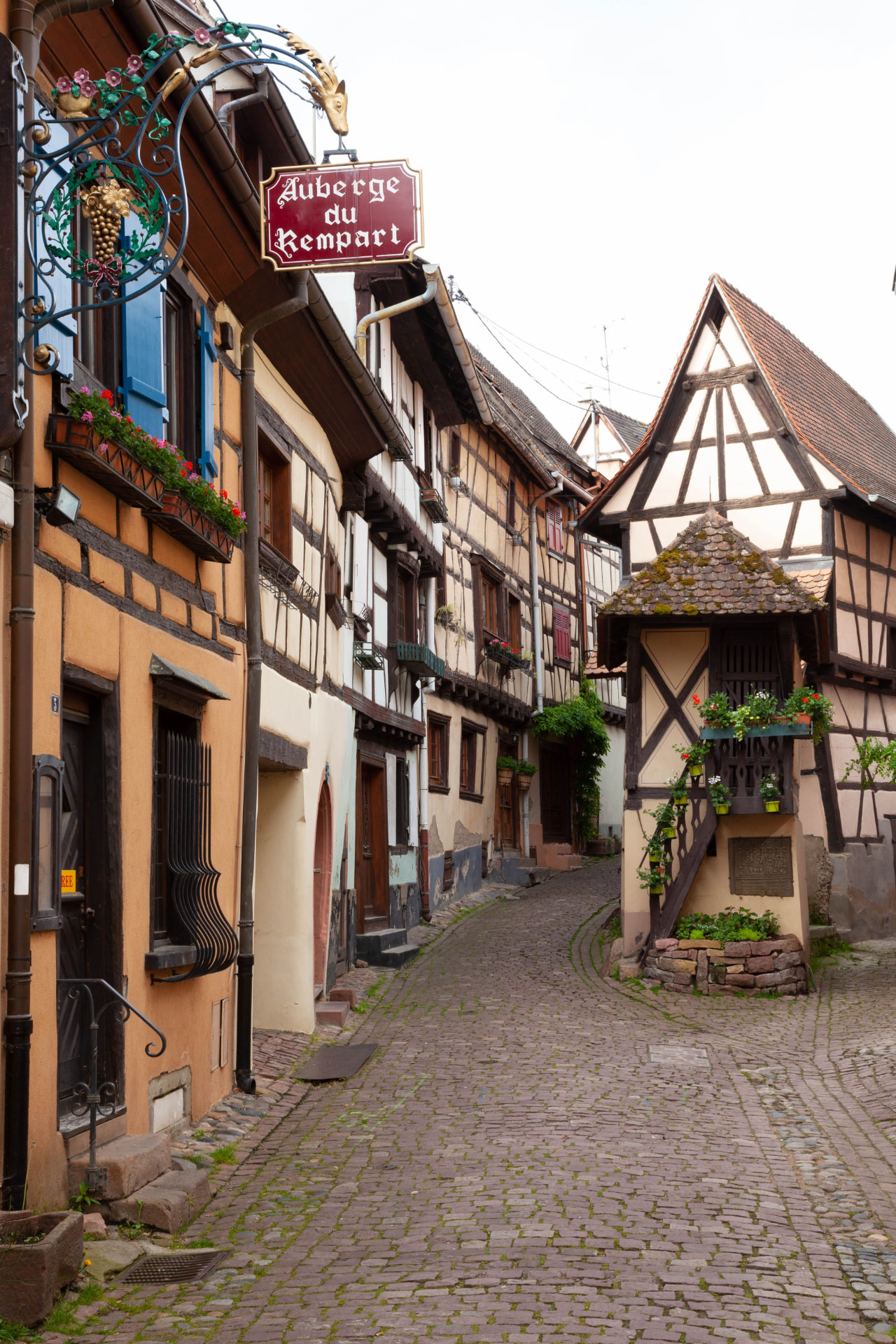
Eguisheim
Just 7 km from Colmar. Its streets are laid out in concentric rings around a castle; you can't get lost — keep walking and you end up back where you started. In 2013 it was voted France's favourite village. Pope Leo IX was born here in 1002; the Saint-Léon fountain on the main square and the chapel built in 1894 bear his name. The most iconic shot is on Rue du Rempart Sud. You can do wine tastings at cellars such as Joseph Freudenreich, Wolfberger and Léon Beyer.
- 02
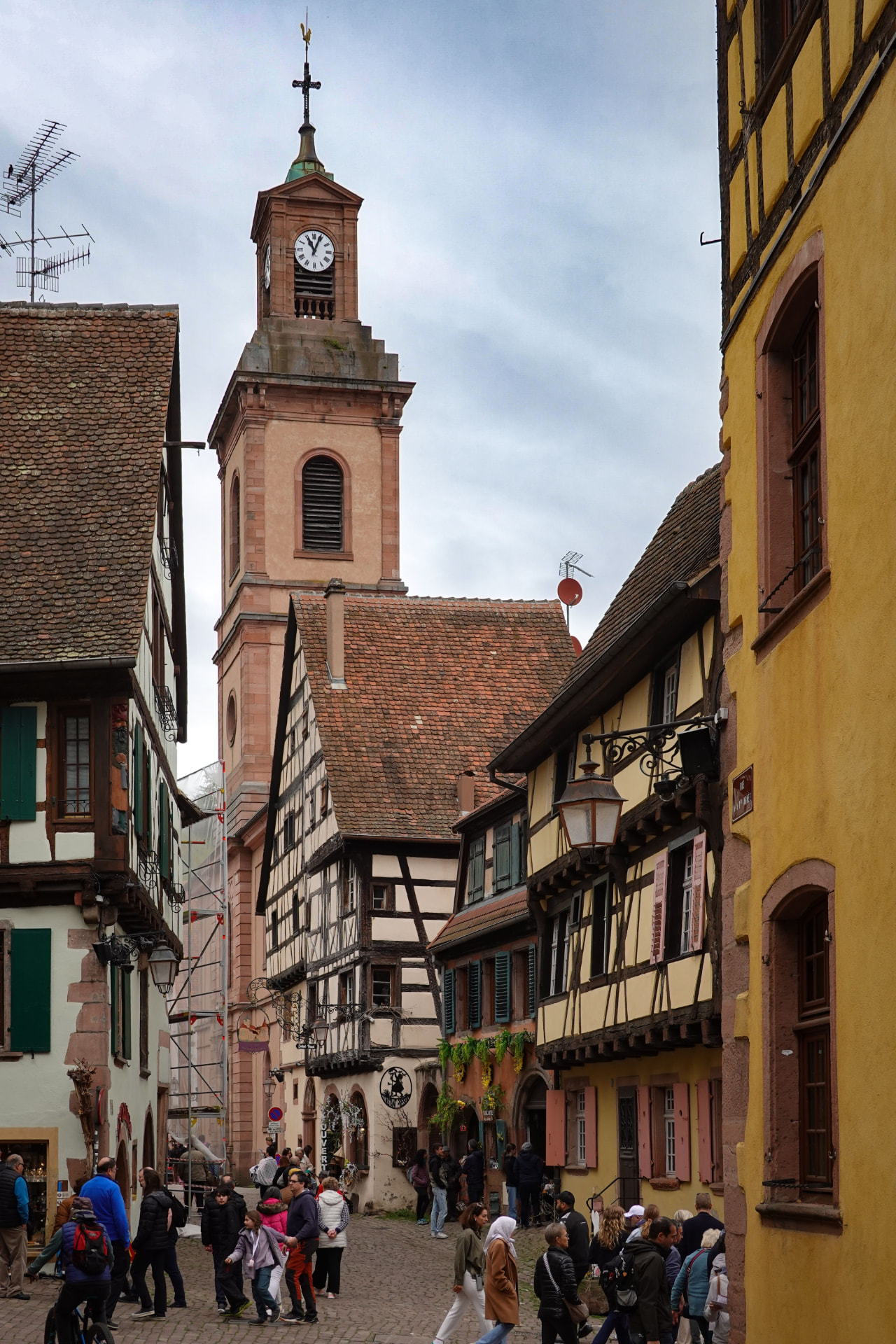
Riquewihr
With its ramparts and the Dolder Tower built in 1291, this village has come down from the Middle Ages almost unchanged; it even came through the Second World War unharmed. Along the main street, Rue du Général de Gaulle, you'll find flower-filled houses, vineyards and Riesling cellars. The Dolder Tower has a small museum about the village's history. Don't miss Käthe Wohlfahrt, the Christmas shop that's open all year round 🎄
- 03
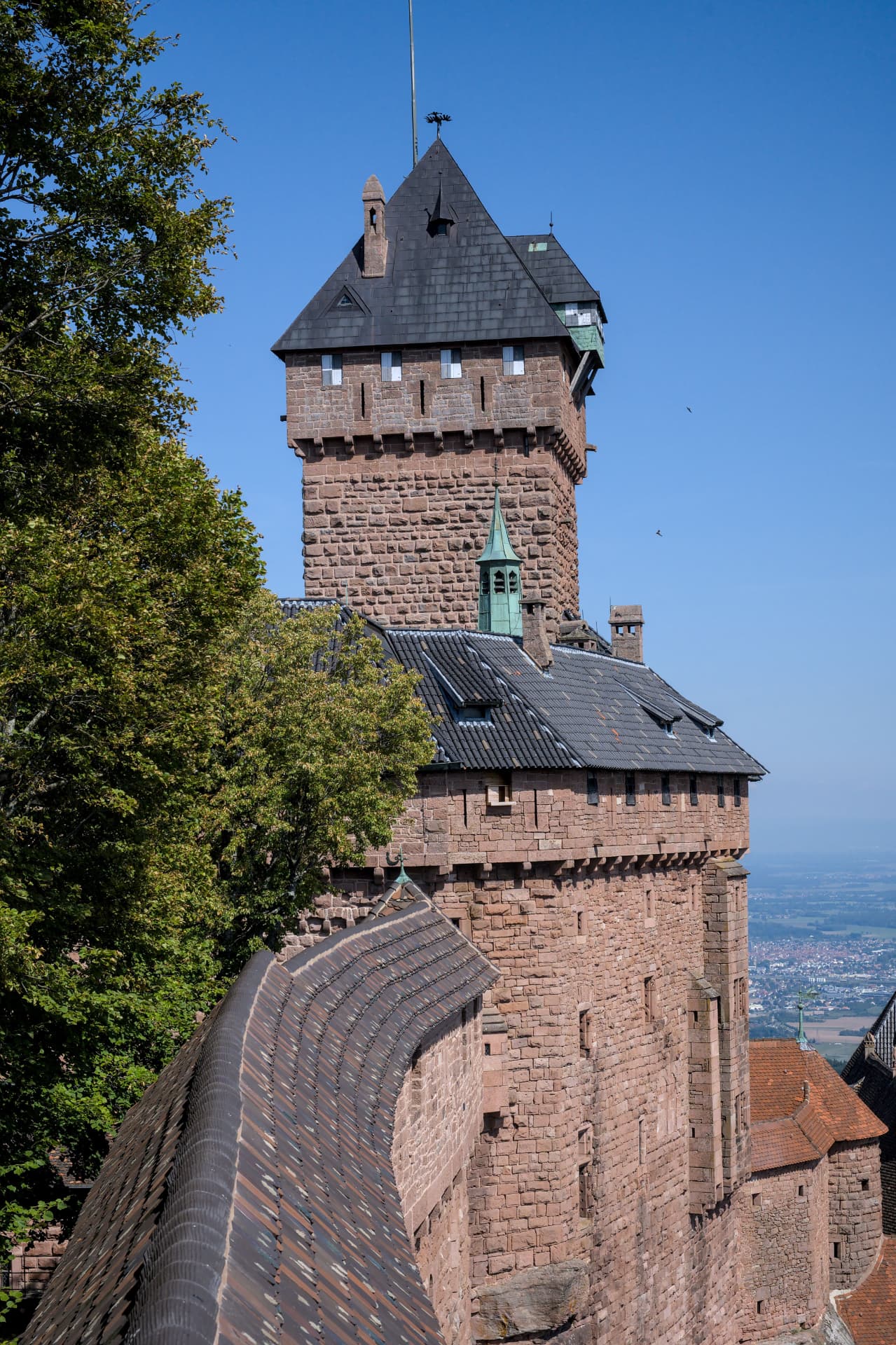
Kaysersberg
A very photogenic little town with its historic stone bridge over the Weiss River and castle ruins on the hill. In 2017 it was voted France's favourite village. Nobel Peace Prize winner Albert Schweitzer was born here in 1875. It's worth climbing up to the castle to look down over the vineyards.
- 04
Ribeauvillé
One of the oldest towns on the Wine Route, with three medieval castles rising on the hills above it. Pfifferdaj, held on the first weekend of every September and considered the oldest festival in Alsace with more than 600 years of history, is the festival of the wandering minstrels. At Christmas, it's famous for its medieval-themed market.
- 05
Hunawihr
A tiny village with a fortified church in the middle of the vineyards. Right next door, NaturOparC is a park where storks are protected and can be seen up close; perfect for families with children.
- 06
Obernai
One of the closest towns to Strasbourg; known for its big square lined with colourful houses and its Thursday market.
- 07
Bergheim & Dambach-la-Ville
Two quieter, more affordable villages with 14th-century ramparts, away from the tourist crowds.
- 08
Turckheim
6 km from Colmar; famous for its tradition of the night watchman who walks the streets with a lantern on summer nights.
- 09
Haut-Koenigsbourg Castle
This mountain castle at an altitude of 750 metres was restored between 1900 and 1908 by the German Emperor Wilhelm II. From here you can see both the Alsace plain and the Black Forest.
Christmas markets 🎄
Christmas markets 🎄
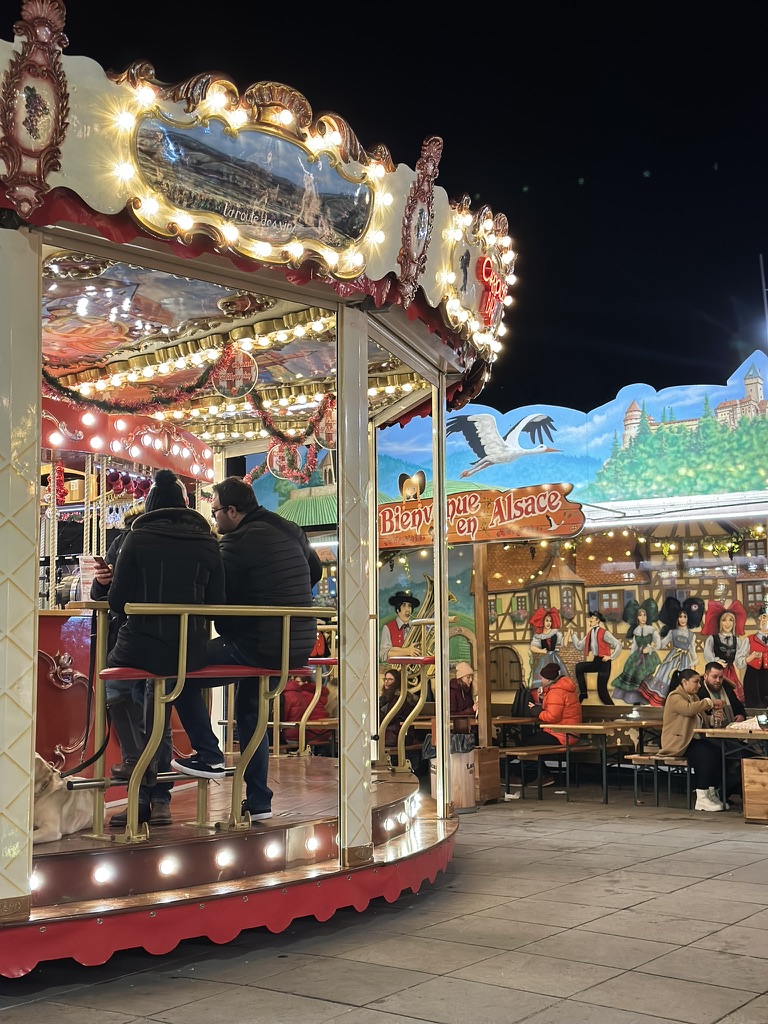
Colmar's Christmas market is always near the top of the lists of Europe's most beautiful. The markets usually open in the last week of November and run until the last days of December; hours are shortened on 24 and 25 December, and some markets close after Christmas. Check the exact dates every year on the Colmar Tourist Office website.
| Market | What it's known for |
|---|---|
| Place des Dominicains | In front of the Dominican Church; handmade ornaments and gifts |
| Place de l'Ancienne Douane & Koïfhus | Inside and in front of the old customs house; artisan stalls |
| Place Jeanne d'Arc | Local treats and mulled wine |
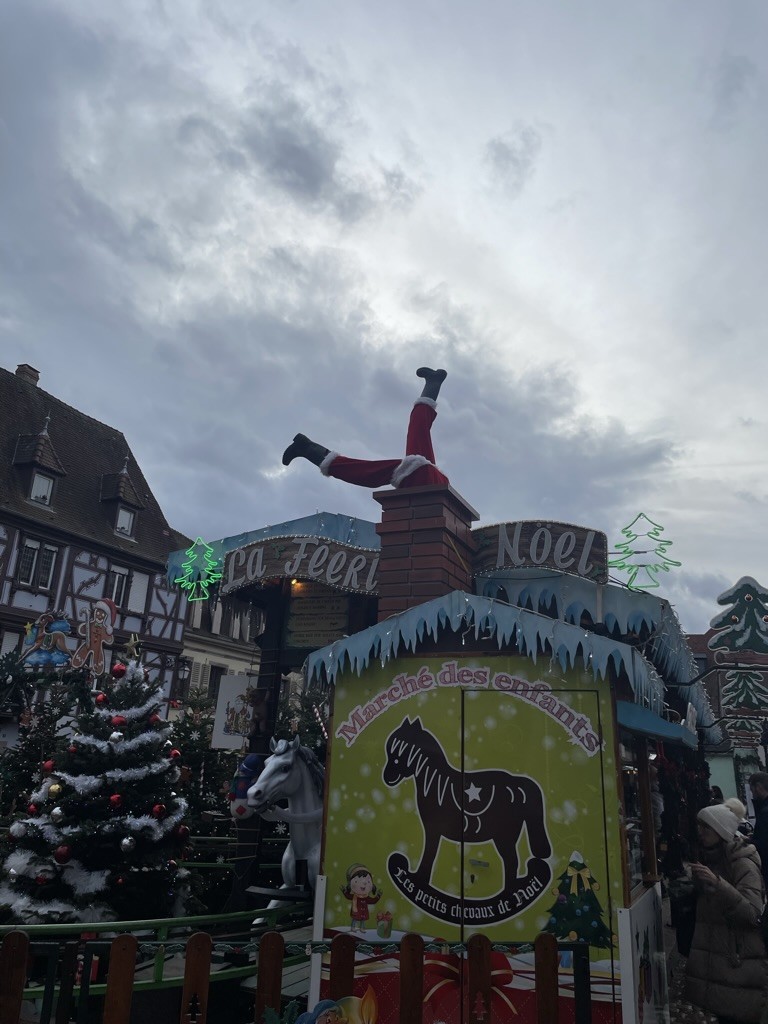
| Petite Venice | A market for children, with canal views |
| Place de la Cathédrale | Gourmet products, food and drink |
Christmas in the villages
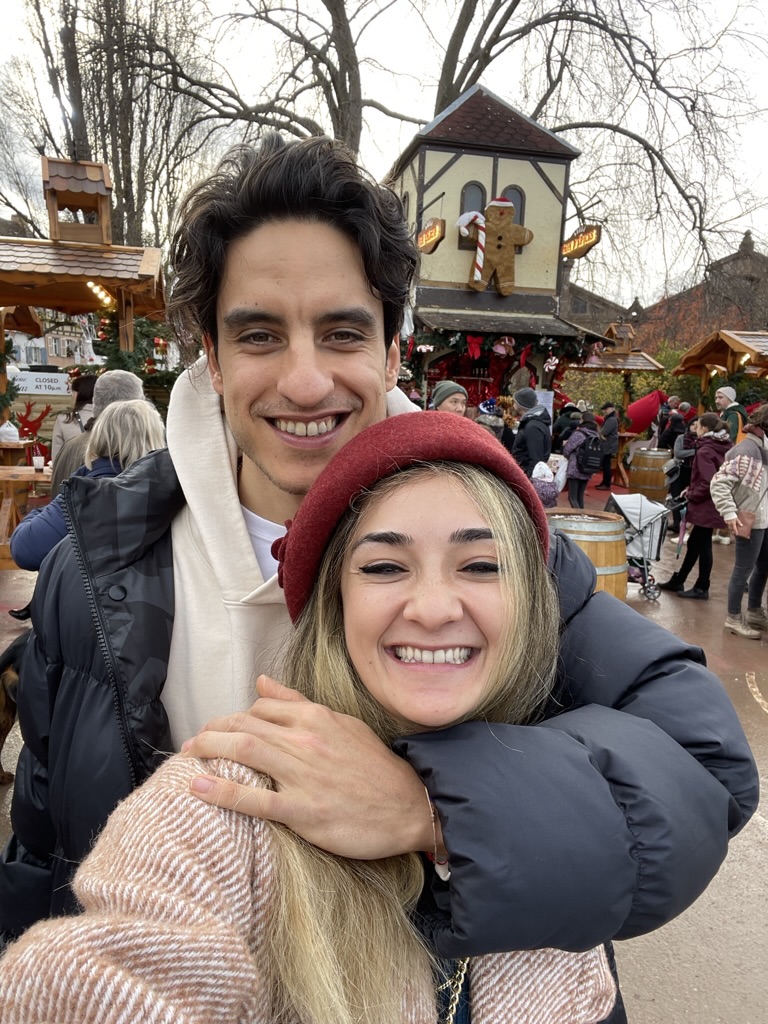
Eguisheim's market is small and nostalgic; Riquewihr's and Kaysersberg's are like something out of a fairytale; Ribeauvillé's is medieval-themed. Some village markets only open at weekends, so check before you go.
Tips
- Weekdays and early mornings are the calmest; weekend afternoons are very crowded.
- Even if you come before the markets open, Alsace houses start getting decorated from mid-November.
- Stay a night in Colmar to see the evening lights; for us, that was the most beautiful moment of the trip 💛
Food & Drink
Food & Drink
Alsace cuisine is where French finesse meets German heartiness. Traditional restaurants here are called winstub: wooden tables, cosy and generous portions 😋
Must-try
- Tarte flambée (Flammekueche) — Wafer-thin dough with cream, onions and bacon; some places let you choose your toppings.
- Choucroute — Alsace's signature dish of sauerkraut with sausages and meats.
- Baeckeoffe — A stew of wine-marinated meats and potatoes, baked in an earthenware pot.
- Munster cheese & tartiflette — The region's pungent but delicious cheese; at the Christmas markets it's also sold as a potato tartiflette.
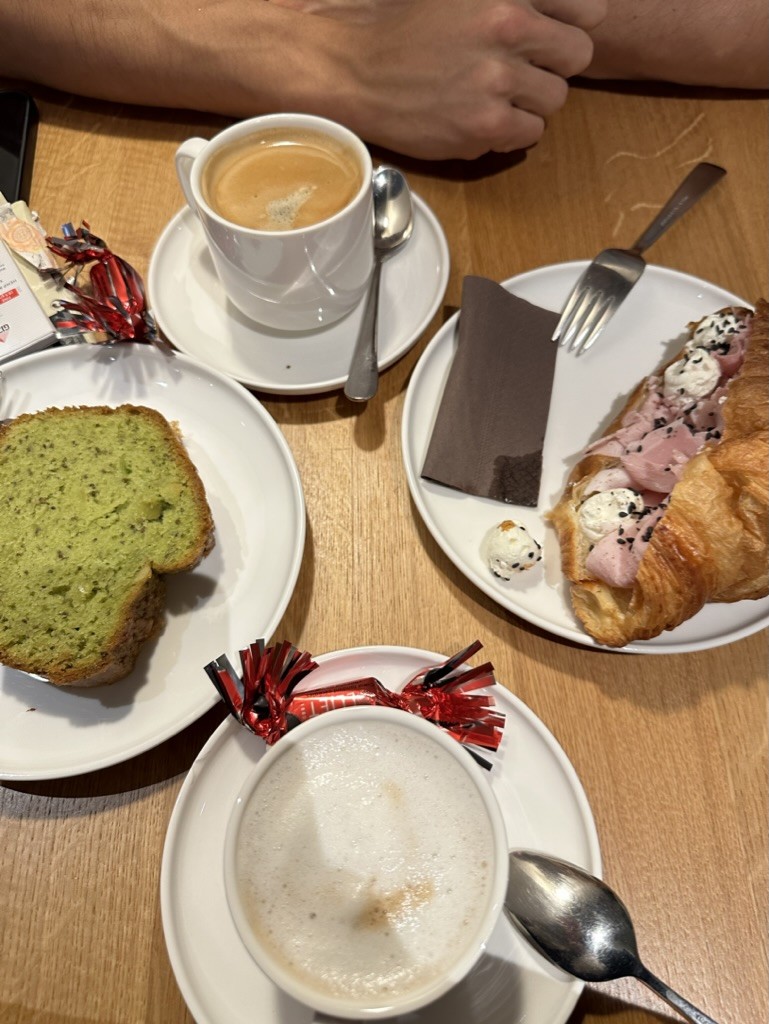
- Kougelhopf — The Alsace cake with raisins, baked in its own special mould.
- Bredele — Alsace biscuits made especially for Christmas.
- Vin chaud & hot apple juice — No going home without mulled wine at the market 🍷
Our experience
We did a road trip with food on board, thanks to the burgers we picked up from Five Guys on our way out of Strasbourg :) In Colmar, we mostly lived on tarte flambée, meat skewers, mulled wine and Nutella crêpes from the market stalls 🤓
Recommendations
- A winstub experience in Colmar — There are lots of traditional restaurants around Petite Venice and Grand Rue; book ahead for dinner at Christmas.
- Maison des Têtes — An elegant dinner in a historic building.
- Au Trotthus (Riquewihr) — A small restaurant listed in the Michelin Guide that brings together Japanese and Alsace cuisine.
- Wine tasting in Eguisheim — At cellars such as Joseph Freudenreich, Wolfberger, Domaine Gruss and Léon Beyer you can both taste and shop.
Alsace wines
Riesling, Gewürztraminer, Sylvaner, Muscat d'Alsace and Pinot Blanc. Almost all Alsace wines are white and sold in tall, slender "flute" bottles; Crémant d'Alsace is the region's sparkling wine.
Tip
In France, sharing one plate of food isn't really the done thing, and some places may charge extra for it. Most patisseries don't have seating.
Alsace with a Baby 👶
Alsace with a Baby 👶
Colmar and the villages are small, flat and walkable; it's a pretty easy region to explore with a baby. The tricky parts are the cobbled streets, the Christmas crowds and the cold.
Stroller or carrier?
- Colmar's old town and the villages are largely cobbled; a stroller with big wheels makes life easier.
- At the Christmas markets, especially at weekends and in the evenings, a stroller barely moves; at those times a carrier is much more comfortable.
- Visiting the markets when they open in the morning and seeing the lights around 17:00 is the plan that best fits a baby's sleep routine.
Getting around & where to stay
- A car is the easiest way to explore the villages with a baby; book the baby seat separately when you rent.
- An apartment or Airbnb with parking is very practical, both for the car and for preparing baby food.
0–2 years: what can I feed them, and where?
- Ready-made food & jars: You'll find baby food jars (petits pots) and fruit purées (compote) in Colmar's supermarkets, and formula in pharmacies (pharmacie).
- At restaurants: You can ask them to warm the bottle or jar. Ask about a high chair in advance.
- Baby-friendly Alsace dishes: Plain spaetzle, mashed potatoes, steamed vegetables and plain crêpes. Choucroute and smoked meats are very salty and not suitable for babies.
- Careful: Raw-milk cheeses like Munster aren't recommended for young children; whole nuts and hard foods like chestnuts also carry a choking risk. And of course, let's not give honey or sugar/sweets to babies under 1 ☺️
- Drinks at the market: There's alcohol-free hot apple juice for the grown-ups; for babies, water is best ☺️
Things to do with a baby
- NaturOparC (Hunawihr): A chance to see storks and otters up close.
- Petite Venice children's market: Colmar's market just for children at Christmas.
- Petite Venice boat tour: A short, lovely canal tour in spring and summer.
- Stork nests in the villages: Counting the storks on the rooftops is a game in itself for little ones 🪶
Experiences & Tours
Experiences & Tours
Alsace villages tour from Strasbourg
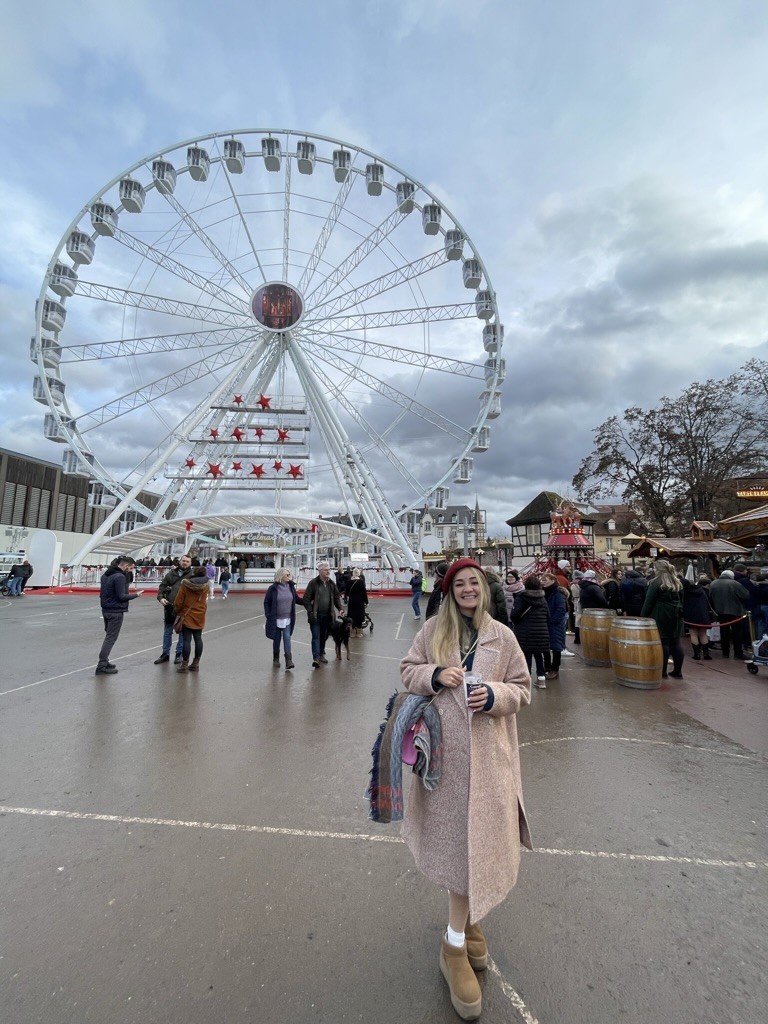
For anyone travelling without a car, the easiest way to see Colmar and the fairytale villages in a single day.
Book on GetYourGuide ↗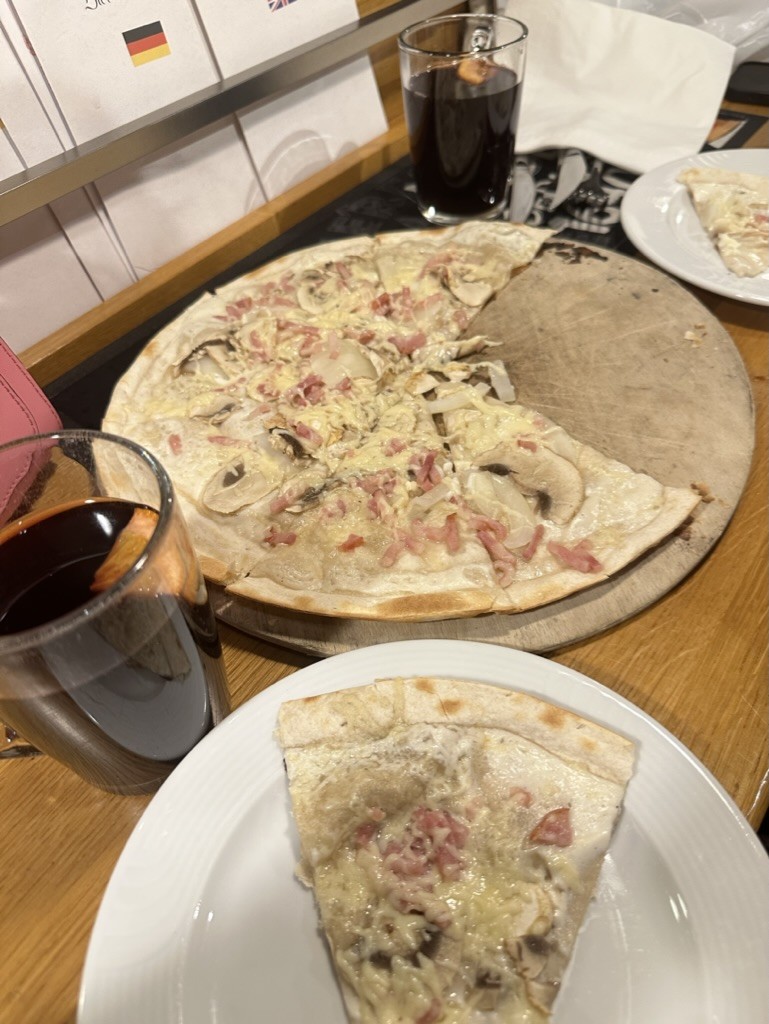
Alsace wine route day trip from Strasbourg
Haut-Rhin villages and wine tasting in a single day 🍷
Book on GetYourGuide ↗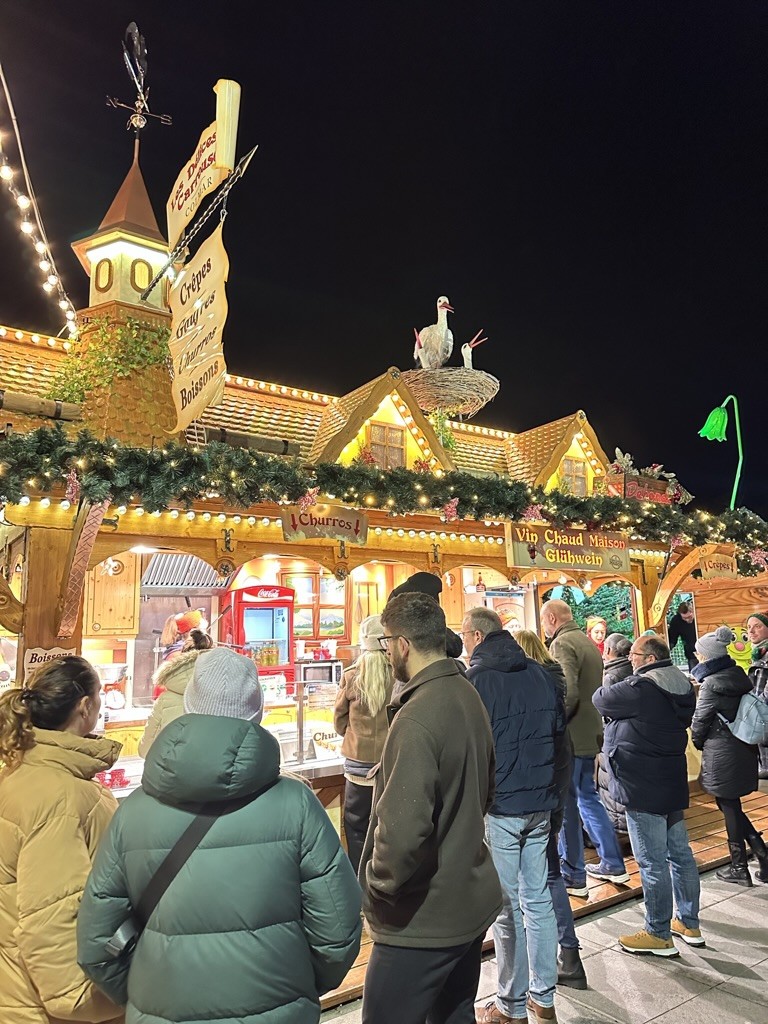
Alsace wine tour
Cellar visits among the vineyards, with Riesling and Gewürztraminer tastings.
Book on GetYourGuide ↗Colmar Petite Venise boat tour
A lovely tour of about half an hour along the canals, between the pastel houses.
Book on GetYourGuide ↗Some of the links in this section are affiliate links; when you book through them, we earn a small commission at no extra cost to you. It helps us keep the blog going — thank you 💛
Photo spots
Photo spots
Petite Venice, Rue de Turenne bridge
The classic shot of the canal and pastel houses.
Quai de la Poissonnerie
The colourful fishermen's houses.
Rue des Marchands & Au Vieux Pignon
Colmar's most photographed corner.
Maison Pfister
Its wooden balcony and painted walls.
The Koïfhus's colourful roof
From Place de l'Ancienne Douane.
Eguisheim, Rue du Rempart Sud
The postcard of Alsace.
Kaysersberg, the stone bridge over the Weiss River.
Riquewihr, in front of the Dolder Tower.
Evening lights at Christmas
Once it gets dark in Colmar, every street is a photo of its own ✨
Find it on the map
Find it on the map
Gallery
Daily Alsace itinerary
Daily Alsace itinerary
If it's your first time in Alsace, you can make Colmar your base and use this two-day plan as a starting point:
Day 1
Colmar
Morning: Petite Venice and the Quai de la Poissonnerie; then the Koïfhus, Rue des Marchands, Maison Pfister and Saint-Martin Church. Lunch: tarte flambée at a winstub. Afternoon: the Unterlinden Museum or the Dominican Church. Evening: the Christmas markets and the lights; stay the night in Colmar.
Day 2
The villages & the Wine Route
Early morning: Riquewihr (before the crowds arrive); then the storks in Hunawihr and Ribeauvillé. Lunch in Kaysersberg; climb up to the castle and take your photo from the stone bridge. Late afternoon, on the way back to Colmar: sunset and wine tasting in Eguisheim.
Day 3 (optional)
Haut-Koenigsbourg Castle, Bergheim and Obernai; or move on to Strasbourg. For Strasbourg, take a look at our Strasbourg guide.
See Us on Instagram Too
See Us on Instagram Too
You'll find our Colmar memories in our Instagram reel 💛
Frequently asked questions
Frequently asked questions
How many days should I spend in Colmar?
1 day is enough for Colmar, but stay a night; add 1–2 more days for the villages.
Colmar or Strasbourg — where should I stay?
Colmar, to be close to the villages and enjoy the evening atmosphere; Strasbourg, for more hotel options and city life. The two are about 30 minutes apart by train.
Can I get to the villages without a car?
Yes, but it's hard: buses are infrequent. At Christmas, the shuttles from Colmar station or day tours are the most practical options.
When are the Christmas markets open?
Usually from the last week of November until the last days of December. The dates change every year; check with the Colmar Tourist Office.
Which is the most beautiful village?
Each one has its own feel. The closest to Colmar and the most fairytale-like is Eguisheim; Riquewihr stands out for its medieval atmosphere, and Kaysersberg for its river and castle views.
Is Alsace expensive?
Accommodation gets pricier at Christmas; food and wine, on the other hand, are more affordable than in Paris.
Write to us with your questions, suggestions and collaboration requests. For the rest of our Christmas route, take a look at our Strasbourg guide, and our Basel and Zurich guides too. See you at the next Christmas market 🎄
Questions, collaborations, or a good recommendation? We'd love to hear from you.
Get in touch